A $250 External SSD Pays for Itself in 25 Months
A mid-tier cloud storage plan like Google One or iCloud+ 2TB runs about $10/month — quietly, forever. A one-time $250 portable SSD does the same job with no recurring bill. After two years, you're saving $120/year for as long as the drive keeps spinning.
Payoff Time
25 mo
External SSD Drive vs Cloud Storage Subscription
Product cost
$250
one-time
Annual savings
$120
vs Cloud Storage Subscription
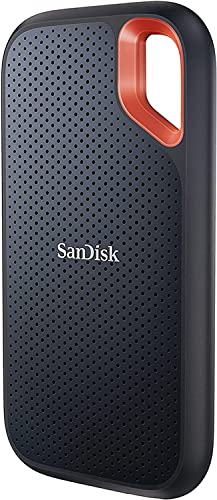
Best Payoff
External SSD Drive
The Setup: The Subscription You Forgot You're Paying
Cloud storage is one of those costs that's engineered to feel like nothing. Ten bucks a month? That's half a lunch. You signed up three years ago when your phone screamed "Storage Full," tapped "Upgrade," and never thought about it again. But $10/month is $120/year, and you've probably already spent $360 without noticing.
An external SSD does the same core job — stores your photos, videos, documents, and backups — except you pay once and own it forever. No monthly drain. No price hikes. No terms-of-service surprises. It just sits on your desk (or in your bag, these things are tiny now) and holds your files.
The Math
We're assuming you're currently paying for a 2TB cloud plan at roughly $10/month — that's the going rate for Google One 2TB or iCloud+ 2TB. The replacement is a 1TB+ portable external SSD at $250, with zero ongoing costs. No subscriptions, no per-gigabyte fees, no nothing.
At $10/month in savings, the SSD pays for its full $250 purchase price in exactly 25 months. From month 26 onward, every dollar you would have sent to Google or Apple stays in your pocket — that's $120/year, indefinitely. Keep the drive for five years and you've saved $350 net after the purchase price.
| External SSD Drive | Cloud storage subscription | |
|---|---|---|
| Upfront cost | $250 | $0 |
| Monthly ongoing | $0 | $10 |
| Month 1 total | $250 | $10 |
| Month 2 total | $250 | $20 |
| Month 3 total | $250 | $30 |
| Month 4 total | $250 | $40 |
| Year 1 total | $250 | $120 |
| Year 3 total | $250 | $360 |
| 5-year total | $250 | $600 |
* All figures are estimates. See methodology for assumptions.
Cumulative Cost Over Time
The lines cross at the breakeven point — that's when the savings zone begins.
When This Does NOT Pay Off
Let's be honest: cloud storage and a local SSD aren't perfectly interchangeable. Cloud gives you anywhere-access from any device, automatic syncing, and — crucially — off-site backup. If your apartment floods or your bag gets stolen, the cloud doesn't care. Your SSD very much does. If you rely on real-time collaboration (think shared Google Drive folders for work) or you need to access files from your phone on the go without carrying the drive, ditching cloud entirely might create more headaches than savings.
There's also the lifespan question. SSDs are durable, but they're not immortal. Most portable SSDs last 5–10 years with normal use, and they can fail without warning. Cloud providers handle redundancy for you — that's part of what your $10/month buys. If you go the SSD route, you should still keep critical files backed up somewhere else (even a free-tier cloud account works for the essentials).
This payoff works best for people who primarily use cloud storage as a dump for photos, videos, and large files they rarely access across devices. If that's you, you're paying a monthly fee for what is essentially a fancy hard drive in someone else's building. Buying your own is the obvious move.
Sensitivity Analysis: Your Results May Vary
Payoff time changes based on how much you currently spend.
Heavy use (2TB + extras at $20/mo)
You're stacking cloud plans or paying for a family tier — payoff drops to just 12.5 months with $240/year in savings.
12.5mo
$240/yr
Typical use (2TB plan at $10/mo) (our base case)
You're paying for a standard 2TB Google One or iCloud+ plan — the SSD pays off in 25 months and saves $120/year.
25mo
$120/yr
Light use (basic 200GB plan)
You're on a cheaper $3/mo cloud tier — breakeven stretches to nearly 7 years, saving just $36/year.
83.3mo
$36/yr
"A $250 external SSD replaces a $10/month cloud plan and pays for itself in 25 months — then saves you $120 every year after that."
What We Recommend
Below are three external drives at different price points, all capable of replacing a paid cloud plan. Our payoff math assumes the mid-tier $250 SSD, but the budget option breaks even even faster — and the premium pick gives you enough space to cancel cloud storage and never think about it again.

Seagate Portable 2TB External Hard Drive HDD — USB 3.0 for PC, Mac, PlayStation, & Xbox -1-Year Rescue Service (STGX2000400)
$95
upfront
9.5mo
payoff
$120
/ year
The Seagate Portable 2TB is a traditional spinning hard drive, not an SSD, so it's slower and slightly less durable — but at $90, it breaks even in just 9 months against a $10/mo cloud plan. If you mostly store photos and documents you don't access constantly, the speed difference won't matter and the savings kick in way faster.
Check current price →Price shown is approximate. Click for current price. Affiliate link.
SanDisk 2TB Extreme Portable SSD - Up to 1050MB/s, USB-C, USB 3.2 Gen 2, IP65 Water and Dust Resistance, Updated Firmware - External Solid State Drive - SDSSDE61-2T00-G25
$279
upfront
27.9mo
payoff
$120
/ year
The SanDisk Extreme 2TB is the sweet spot and the drive our core math is built on. It's a true SSD with 1050MB/s read speeds, water and dust resistance (IP65), and a compact design that fits in a pocket. At $250, the 25-month payoff is reasonable, and you get a drive that's genuinely tough enough to toss in a backpack every day.
Check current price →Price shown is approximate. Click for current price. Affiliate link.
SanDisk 4TB Extreme Portable SSD - Up to 1050MB/s, USB-C, USB 3.2 Gen 2, IP65 Water and Dust Resistance, Updated Firmware - External Solid State Drive - SDSSDE61-4T00-G25
$439
upfront
43.9mo
payoff
$120
/ year
The SanDisk Extreme 4TB is for the person whose cloud storage is perpetually at 90% full. Double the capacity means you can consolidate everything — phone backups, video projects, music libraries — onto one drive and still have room to grow. At $400, breakeven takes longer (40 months at $10/mo savings), but if you're paying for a higher-tier plan, the math tightens up fast.
Check current price →Price shown is approximate. Click for current price. Affiliate link.
What we didn't account for
- → SSDs Can Fail Too Our math assumes the drive lasts long enough to reach payoff and beyond. Most portable SSDs last 5–10 years, but hardware failure is always possible. Budget for a replacement — or at least keep a free-tier cloud backup for your most critical files.
- → Cloud Does More Than Store The $10/mo cloud plan includes perks like automatic photo sync, cross-device access, and family sharing. Our calculation only accounts for raw storage replacement, not these convenience features you may miss.
- → No Off-Site Backup Included A local SSD sitting next to your laptop isn't protected against theft, fire, or water damage. Cloud storage is inherently off-site. If you cancel cloud entirely, your disaster-recovery plan has a gap.
- → Prices Change, Plans Shift Cloud providers occasionally adjust pricing or bundle storage with other services. If Google or Apple drops the price of 2TB to $5/mo, your breakeven doubles to over 4 years. We used current 2024 pricing.
See how External SSD Drive compares to other tech products.
Tech Rankings →