A $100 Jump Starter Pays for Itself in 8 Months
The average roadside assistance jump costs about $75 per call. With a dead battery hitting most drivers 1–2 times a year, that's $150/yr spent waiting in a parking lot for someone else to do what a $100 gadget in your trunk could do in 30 seconds.
Payoff Time
8 mo
Portable Jump Starter vs Jump Start Service
Product cost
$99.95
one-time
Annual savings
$150
vs Jump Start Service

Best Payoff
Portable Jump Starter
The Setup: Your Battery Will Die at the Worst Possible Time
It's January. It's dark. You're in a grocery store parking lot and your car won't start. You call roadside assistance — or worse, you Google "jump start service near me" — and now you're waiting 30 to 90 minutes for someone to show up with cables you could've owned for less than the cost of this single rescue.
The typical jump start service call runs $50–$150 depending on your location, time of day, and whether you have a membership plan. We'll use the midpoint: about $75 per call. And most drivers need a jump at least once or twice a year — old battery, cold snap, dome light left on overnight. It happens. The question isn't if, it's when.
The Math
A portable jump starter like the NOCO Boost GB40 costs $99.95. It lives in your glove box or trunk, weighs about as much as a paperback book, and needs nothing but an occasional USB recharge. No subscription, no membership fee, no dispatching a stranger to your location.
At 2 jump start calls per year averaging $75 each, you're spending about $150/yr — or $12.50/mo — on a problem a one-time $100 purchase solves permanently. That means the jump starter pays for itself in about 8 months, and then saves you roughly $150 every year after that. Plus, you skip the 45-minute wait in the cold.
| Portable Jump Starter | Jump Start Service | |
|---|---|---|
| Upfront cost | $100 | $0 |
| Monthly ongoing | $0 | $13 |
| Month 1 total | $100 | $13 |
| Month 2 total | $100 | $25 |
| Month 3 total | $100 | $38 |
| Month 4 total | $100 | $50 |
| Year 1 total | $100 | $150 |
| Year 3 total | $100 | $450 |
| 5-year total | $100 | $750 |
* All figures are estimates. See methodology for assumptions.
Cumulative Cost Over Time
The lines cross at the breakeven point — that's when the savings zone begins.
When This Doesn't Pay Off
Let's be honest: if your car battery is in great shape and you live somewhere mild year-round, you might only need a jump once every few years. In that scenario, the payoff timeline stretches well past a year. A jump starter is a lousy investment if your battery never actually dies — it'll just sit in your trunk being a very expensive paperweight with a built-in flashlight.
There's also the reliability question. Budget jump starters can lose their charge sitting unused for months, and some simply don't have enough cranking amps for larger engines. If you buy the cheapest option and it fails when you actually need it, you're right back to calling for help — except now you're $40 poorer and still waiting.
Finally, if you already pay for a roadside assistance plan bundled with your car insurance or credit card, your marginal cost per jump might be $0. In that case, the math changes entirely — you're paying $100 to replace something you're already getting "free." Check your existing coverage before you buy.
Sensitivity Analysis: Your Results May Vary
Payoff time changes based on how much you currently spend.
Heavy use (3 jumps/year)
Older battery, extreme weather, or multiple vehicles — you're calling for a jump about 3 times a year.
5.3mo
$225/yr
Typical use (2 jumps/year) (our base case)
Two jump start calls per year at ~$75 each, which is the average for most drivers with aging batteries.
8mo
$150/yr
Light use (1 jump/year)
You only need a jump start about once a year at ~$75 per call — payoff takes longer but still gets there.
16mo
$75/yr
"A $100 portable jump starter replaces $150/yr in roadside service calls and pays for itself in 8 months — then every dead battery after that is a free fix."
What We Recommend
We picked three portable jump starters at different price points. Our payoff math assumes 2 jump start calls per year at $75 each ($150/yr replaced) — your breakeven shifts based on which tier you choose.

Sharmeal Car Jump Starter 5000A, Jump Starter Battery Pack for 10.0L Gas and 9.0L Diesel, 12V Portable Jump Box with LED Light
$38
upfront
3mo
payoff
$150
/ year
The Sharmeal 5000A is the cheapest way to stop paying for jump start calls. At under $38, it pays for itself after a single avoided service call. It boasts impressive peak amp ratings and covers most engine sizes, but budget jump starters can be hit-or-miss on long-term reliability — keep it charged and it'll do the job.
Check current price →Price shown is approximate. Click for current price. Affiliate link.
NOCO Boost GB40: 1000A UltraSafe Jump Starter – 12V Lithium Battery Booster Pack, Portable Jump Box, Power Bank & Jumper Cables - for 6.0L Gas and 3.0L Diesel Engines
$100
upfront
8mo
payoff
$150
/ year
The NOCO Boost GB40 is the one we built the math around, and it's the gold standard for a reason. At $99.95 it's not the cheapest, but NOCO's build quality, safety features (spark-proof clamps, reverse polarity protection), and reputation for actually working when you need it make it the best balance of cost and confidence. It also doubles as a USB power bank.
Check current price →Price shown is approximate. Click for current price. Affiliate link.
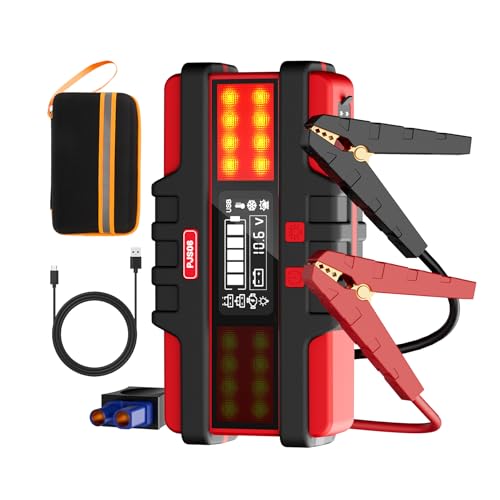
Battery Jumper Starter Portable, 2500A (12V) - Portable Booster Pack with Voltage Detection & Protection for Gas/Diesel (Up to 8.0L/6.5L)
$50
upfront
4mo
payoff
$150
/ year
At just $24.98, the 2500A Portable Booster is actually priced below our budget pick — making it the fastest payoff of the three. It includes voltage detection and protection features, and covers gas engines up to 8.0L and diesel up to 6.5L. The tradeoff at this price point is uncertainty about long-term durability, but the breakeven is so fast that even one successful jump makes it worth the gamble.
Check current price →Price shown is approximate. Click for current price. Affiliate link.
What we didn't account for
- → Battery health matters Our math assumes the jump starter can actually revive your battery. If your battery is truly dead (not just drained), no jump starter will help — you'll need a full replacement, which is a separate cost entirely.
- → Service costs vary widely We used $75 as an average jump start call cost, but prices range from $50 to $150+ depending on location, time of day, and provider. Your actual savings could be higher or lower.
- → Usage frequency is estimated We assumed 2 jump starts per year based on typical driver data. If you only need a jump once every 2–3 years, the payoff timeline extends significantly.
- → Existing coverage not factored in Many auto insurance policies, credit cards, and manufacturer warranties include free roadside assistance. If you already have coverage, the jump starter may be duplicating a benefit you're already paying for.
See how Portable Jump Starter compares to other transportation products.
Transportation Rankings →